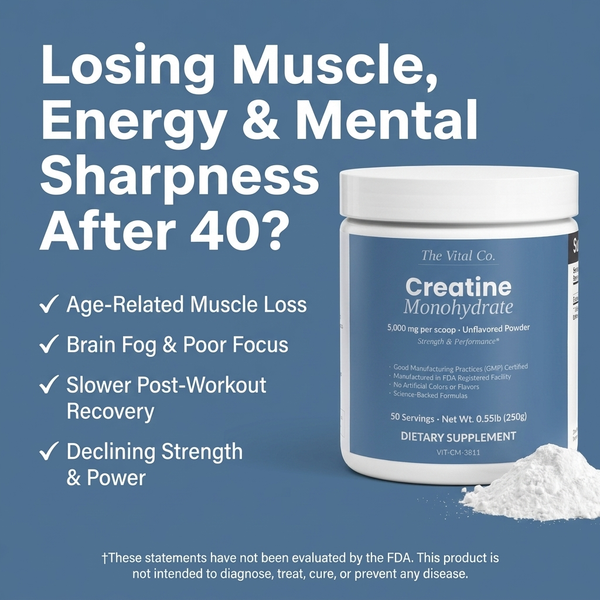
Creatine is the most extensively studied sports nutrition supplement in history, yet the vast majority of research has been conducted in men. As scientific interest in sex-specific physiology grows, a clearer picture is emerging of how creatine supplementation affects women — from skeletal muscle and bone density to cognitive function and hormonal health. This article examines the available clinical evidence on creatine for women, separating established findings from preliminary data and marketing hype.
This article is for informational purposes only and does not constitute medical advice. Consult your physician before starting any supplement.
Table of Contents
- What Is Creatine and Why Does It Matter for Women?
- What the Clinical Evidence Shows
- Dosing: What the Studies Used
- Safety and Side Effects
- Frequently Asked Questions
- References
What Is Creatine and Why Does It Matter for Women?
Creatine is a naturally occurring compound synthesized primarily in the liver from the amino acids arginine, glycine, and methionine. Approximately 95% of the body's creatine is stored in skeletal muscle as phosphocreatine, where it plays a critical role in regenerating adenosine triphosphate (ATP) during high-intensity, short-duration activities. The remaining 5% is distributed across the brain, kidneys, and other tissues.
Women produce approximately 20–30% less endogenous creatine than men, largely due to lower muscle mass and potentially due to hormonal differences that affect creatine synthesis. This lower baseline means women may have a comparatively greater capacity to benefit from exogenous creatine supplementation, as their muscle stores have more room for saturation. Women also tend to consume less dietary creatine, since the primary food sources — red meat and fish — are eaten in smaller quantities on average by women compared to men.
Despite these physiological factors, women have historically been underrepresented in creatine research. A growing body of literature is beginning to address this gap, but it remains important to acknowledge that many widely cited findings about creatine are derived primarily from male subjects and may not translate directly to women.
What the Clinical Evidence Shows
Muscle Strength and Exercise Performance
The evidence that creatine supplementation improves upper- and lower-body strength in women is generally consistent, though the magnitude of effect may differ from what is observed in men. Multiple RCTs have demonstrated that women supplementing with creatine monohydrate during resistance training programs experience greater increases in lean body mass and muscular strength compared to placebo groups.
The mechanism is well-established: increased intramuscular phosphocreatine stores allow for greater training volume — more repetitions and sets at a given intensity — which over time leads to enhanced muscular adaptations. This effect appears to be consistent across premenopausal and postmenopausal women, though the absolute gains may differ based on training status and hormonal milieu.
It is worth noting that some studies in women have found more modest strength improvements compared to those reported in male cohorts. Whether this reflects genuine sex-based differences in creatine metabolism or simply the smaller number of female-specific studies (and thus wider variability in results) remains an open question.
Bone Health and Postmenopausal Women
One of the more clinically significant areas of creatine research in women involves bone mineral density (BMD), particularly in postmenopausal populations. Estrogen decline after menopause accelerates bone resorption, and interventions that can slow or reverse this process are of considerable public health interest.
Several RCTs have examined creatine supplementation combined with resistance training in postmenopausal women. Some of these studies have reported favorable effects on bone geometry, bone mineral density at the hip and femoral neck, and markers of bone resorption. However, the results are not entirely consistent across trials, and some studies have found no significant difference in BMD between creatine and placebo groups.
The proposed mechanism involves creatine's role in osteoblast energy metabolism — bone-forming cells require substantial ATP, and enhanced phosphocreatine availability may support their function. Additionally, the indirect effects of greater muscle strength on mechanical loading of bone may contribute to improved skeletal health. These findings, while promising, require larger and longer-duration trials to establish clinical significance. Human clinical trials with fracture outcomes as endpoints are still needed.
Cognitive Function and Brain Health
The brain is a metabolically demanding organ, consuming roughly 20% of the body's resting energy despite comprising only about 2% of body weight. Creatine is present in brain tissue, and phosphocreatine plays a role in maintaining cerebral ATP homeostasis, particularly under conditions of metabolic stress such as sleep deprivation, hypoxia, or cognitive fatigue.
Several small RCTs have explored the effects of creatine supplementation on cognitive performance. Some studies have reported improvements in working memory, processing speed, and mental fatigue resistance, particularly in vegetarian women (who have lower baseline creatine stores due to the absence of dietary meat).
There is also preliminary interest in whether creatine may play a role in mood regulation. Some researchers have hypothesized that creatine could augment the effects of selective serotonin reuptake inhibitors (SSRIs) in women with major depressive disorder, based on the observation that brain bioenergetics are altered in depression. A small number of pilot studies have explored this possibility with mixed but intriguing results. These findings remain preliminary, and larger, well-controlled trials are needed before any clinical recommendations can be made.
Hormonal Considerations
A common concern among women considering creatine supplementation is whether it affects hormonal balance. The available evidence suggests that creatine monohydrate at standard doses does not significantly alter estrogen, progesterone, or testosterone levels in women.
One area that has received attention is creatine's potential interaction with the menstrual cycle. Some researchers have suggested that creatine kinetics may differ across the follicular and luteal phases due to fluctuations in estrogen and progesterone, but the clinical data on this point are sparse and inconclusive. Current evidence does not support the need to time creatine supplementation around the menstrual cycle.
Pregnancy and Reproductive Health
Creatine research in pregnancy is at an early stage, with most data coming from preclinical (animal) models. Animal studies have suggested that maternal creatine supplementation may protect fetal organs — particularly the brain and kidneys — from hypoxic injury during complicated deliveries.
However, human clinical trials investigating creatine supplementation during pregnancy are extremely limited. Given the complexity of pregnancy management — particularly in populations with metabolic conditions — the standard of care remains conservative. Pregnancy management in metabolic disorders requires careful, individualized approaches, as highlighted by international expert surveys identifying significant unmet needs in this area.
Women who are pregnant or planning to become pregnant should discuss any supplementation with their healthcare provider. The safety profile of creatine during pregnancy has not been established through adequate human clinical trials.
Dosing: What the Studies Used
Loading Phase
Many clinical trials in both men and women have used a "loading protocol" consisting of approximately 20 g/day of creatine monohydrate (divided into 4 doses of 5 g) for 5–7 days. This protocol rapidly saturates muscle creatine stores. Some studies in women specifically have used loading doses of 0.3 g/kg body weight/day, which for a 65 kg woman would equate to approximately 19.5 g/day.
A loading phase is not strictly necessary. It accelerates the time to full muscle creatine saturation but is not required for long-term benefits.
Maintenance Phase
Following loading, or as a standalone protocol, the most commonly studied maintenance dose is 3–5 g/day of creatine monohydrate. Many trials in postmenopausal women have used 5 g/day, which is consistent with the dose used in most general population studies. Some studies have used lower doses of 3 g/day, which also appear to maintain elevated muscle creatine stores over time, though saturation takes longer (approximately 3–4 weeks).
Form of Creatine
The overwhelming majority of clinical evidence — in both men and women — has been generated using creatine monohydrate. Other forms, including creatine hydrochloride (HCl), creatine ethyl ester, and buffered creatine (Kre-Alkalyn), have not demonstrated superiority to creatine monohydrate in peer-reviewed clinical trials. Claims that alternative forms offer better absorption or fewer side effects remain unsupported by robust evidence.
Creatine monohydrate remains the recommended form based on the current body of evidence.
Timing
There is limited evidence suggesting that post-exercise supplementation may offer a slight advantage over pre-exercise dosing in terms of muscle creatine retention, but the practical difference appears to be small. Consistency of daily intake is more important than precise timing.
Safety and Side Effects
General Safety Profile
Creatine monohydrate is one of the most extensively studied dietary supplements, with a strong overall safety profile in healthy adults. Short-term (days to weeks) and long-term (months to years) supplementation at recommended doses (3–5 g/day) has not been associated with adverse effects on renal, hepatic, or cardiovascular function in healthy populations.
Weight Gain and Water Retention
One of the most frequently cited concerns among women is the potential for weight gain. Creatine supplementation does lead to an initial increase in total body water, particularly intracellular water, during the first 1–2 weeks of supplementation. This typically amounts to 0.5–2 kg of body mass. It is important to distinguish this from fat gain — the increase reflects water retention in muscle tissue, not adipose tissue accumulation. Over time, any additional weight gain is generally attributable to lean body mass increases from enhanced training adaptation.
Gastrointestinal Effects
Some individuals report mild gastrointestinal discomfort, including bloating, cramping, or nausea, particularly during loading phases when high single doses are consumed. Dividing the daily dose into smaller portions (e.g., 3–5 g taken with meals) and ensuring adequate hydration typically mitigates these effects.
Kidney Function
Creatine supplementation elevates serum creatinine levels — a metabolic byproduct of creatine breakdown. This is a normal pharmacological effect and does not indicate kidney damage. However, because serum creatinine is commonly used as a marker of kidney function, supplementation may complicate the interpretation of routine blood work. Women taking creatine should inform their physicians so that kidney function can be assessed using alternative markers (e.g., cystatin C) if needed.
Individuals with pre-existing kidney disease should consult a nephrologist before using creatine. While there is no robust evidence that creatine causes kidney damage in healthy individuals, adequate safety data in populations with impaired renal function are lacking.
Drug Interactions
Creatine has few documented drug interactions, but caution is advised with nephrotoxic medications (e.g., certain NSAIDs at high doses, some antibiotics) due to the theoretical added burden on the kidneys. Women taking metformin, diuretics, or other medications that affect kidney function or hydration status should consult their physician before supplementing with creatine.
Contraindications
Creatine supplementation is generally contraindicated in individuals with impaired kidney function or those undergoing dialysis. Women with a history of bipolar disorder should exercise caution, as there are theoretical concerns (based on limited case reports) about creatine exacerbating manic episodes, though this has not been confirmed in controlled trials.

Frequently Asked Questions
Will creatine make me bulky?
No. The initial weight increase from creatine supplementation is due to intracellular water retention in muscle, not fat or excessive muscle growth. Women produce significantly less testosterone than men and lack the hormonal profile necessary for rapid, substantial muscle hypertrophy. Creatine may help women build lean muscle more effectively during resistance training, but the degree of muscle growth is determined primarily by training stimulus, caloric intake, and hormonal status — not by creatine alone.
Is creatine safe for long-term use?
The available evidence supports the safety of creatine monohydrate at 3–5 g/day for extended periods. Studies lasting up to 5 years have not identified clinically significant adverse effects in healthy adults. However, the majority of long-term studies have been conducted in men, and more long-duration data in women specifically would be valuable.
Should I take creatine if I don't lift weights?
While the performance benefits of creatine are most pronounced in the context of high-intensity exercise and resistance training, emerging evidence on cognitive benefits suggests potential value for non-exercising populations as well. Women in cognitively demanding occupations, vegetarians or vegans with low dietary creatine intake, and older women concerned about brain health may find supplementation worth discussing with their healthcare provider, though the evidence base for these non-exercise applications is still developing.
Does creatine affect hormonal birth control?
There are no published studies or known pharmacological mechanisms by which creatine monohydrate interferes with hormonal contraceptives. Creatine does not undergo hepatic metabolism via cytochrome P450 enzymes (the pathway through which most drug interactions with oral contraceptives occur), so an interaction is unlikely from a pharmacological standpoint.
Can creatine help with menopause symptoms?
Creatine is not a treatment for menopause symptoms such as hot flashes, mood changes, or sleep disturbances. However, its potential benefits for bone health, muscle preservation, and cognitive function are particularly relevant during the menopausal transition, when declining estrogen accelerates losses in all three domains. Creatine supplementation should be viewed as a potential adjunct to established menopause management strategies (e.g., hormone replacement therapy, resistance training) rather than a standalone intervention.
References
- Smith-Ryan AE, et al. "Creatine Supplementation in Women's Health: A Lifespan Perspective." Nutrients. 2021;13(3):877. DOI: 10.3390/nu13030877
- de Guingand DL, et al. "Risk of Adverse Outcomes in Females Taking Oral Creatine Monohydrate." Nutrients. 2020;12(6):1780. DOI: 10.3390/nu12061780
- Chilibeck PD, et al. "Effects of Creatine and Resistance Training on Bone Health in Postmenopausal Women." Med Sci Sports Exerc. 2015;47(8):1587-1595. DOI: 10.1249/MSS.0000000000000571
- Chen X, et al. "The Effects of Creatine Supplementation on Cognitive Function in Adults." Front Nutr. 2024;11:1424972. DOI: 10.3389/fnut.2024.1424972
- Tam R, et al. "Does Creatine Supplementation Enhance Performance in Active Females?" Nutrients. 2025;17(2):238. DOI: 10.3390/nu17020238
- Desai I, et al. "The Effect of Creatine Supplementation on Lean Body Mass." Nutrients. 2025;17(6):1081. DOI: 10.3390/nu17061081
- Smith-Ryan AE, et al. "Creatine in Women's Health: Bridging the Gap from Menstruation through Pregnancy to Menopause." J Int Soc Sports Nutr. 2025;22(1):2502094. DOI: 10.1080/15502783.2025.2502094