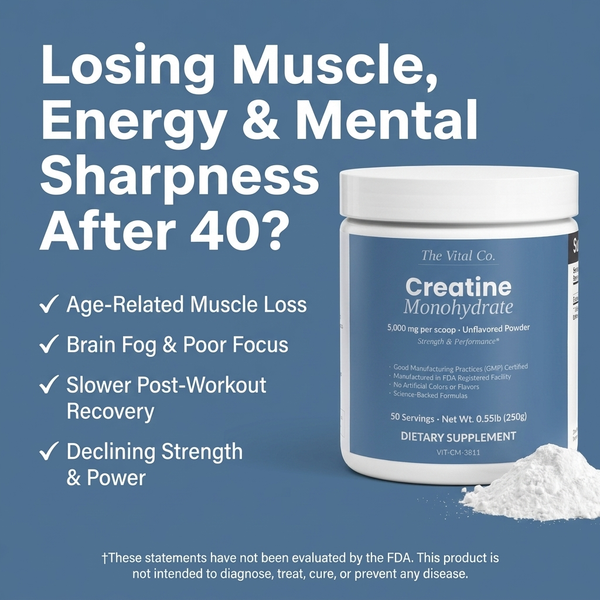
Creatine monohydrate is one of the most extensively studied ergogenic supplements in sports nutrition, with decades of research supporting its role in strength, power, and lean mass development. Creatine gummies have emerged as a newer delivery format, raising a clinically relevant question: does the gummy formulation deliver the same benefits as traditional creatine powder? This article examines the peer-reviewed evidence available on creatine gummies specifically, as well as the broader creatine literature that informs our understanding of this delivery format.
This article is for informational purposes only and does not constitute medical advice. Consult your physician before starting any supplement.
Table of Contents
- What Is Creatine and Why Does Delivery Format Matter?
- What the Clinical Evidence Shows
- Dosing: What the Studies Used
- Safety and Side Effects
- Frequently Asked Questions
- References
What Is Creatine and Why Does Delivery Format Matter?
Creatine is a naturally occurring compound synthesized from the amino acids arginine, glycine, and methionine, primarily in the liver, kidneys, and pancreas. Approximately 95% of the body's creatine is stored in skeletal muscle as phosphocreatine, where it serves as a rapid-turnover energy buffer during high-intensity, short-duration activities by regenerating adenosine triphosphate (ATP) from adenosine diphosphate (ADP).
Creatine monohydrate powder has been the gold-standard supplemental form for decades, but adherence can be a barrier. The taste, mixing requirements, and gritty texture of powder formulations lead some users to abandon supplementation. Creatine gummies aim to solve this compliance problem by delivering creatine monohydrate in a chewable, flavored format that requires no mixing or preparation.
The clinically important question is not whether creatine itself works — that evidence base is robust — but whether the gummy delivery format provides a sufficient dose of bioavailable creatine to replicate the effects seen in powder-based studies. Gummy supplements face formulation challenges: heat during manufacturing, sugar or sugar-alcohol content, and the physical constraints of fitting an adequate dose into a palatable gummy all influence the final product's efficacy.
What the Clinical Evidence Shows
Direct Evidence: Creatine Gummies in Athletes
The most directly relevant study on creatine gummies was published in 2026. Pereira, Forbes, Romano et al. (2026) conducted a study examining the effects of creatine monohydrate gummies on performance and body composition in female beach volleyball athletes. The study investigated whether the gummy delivery format could produce measurable improvements in athletic performance metrics and body composition in a competitive athletic population.[2]
This study is significant because it is one of the first peer-reviewed investigations to specifically test creatine in gummy form rather than the traditional powder format. The choice of female athletes is also noteworthy, as women have historically been underrepresented in creatine research, and emerging evidence suggests that creatine may offer distinct benefits for female physiology. The study was published in the Journal of Functional Morphology and Kinesiology.[2]
Creatine Supplementation in Specific Populations
While direct research on creatine gummies is still in its early stages, the broader creatine literature provides important context. López-Moreno, Muñoz, Aguilar-Navarro et al. (2026) at a Spanish research institution conducted a randomized, triple-blind, placebo-controlled trial examining whether creatine supplementation improves strength and power in physically active individuals following a vegan diet. This RCT is particularly relevant because vegans and vegetarians typically have lower baseline intramuscular creatine stores due to the absence of dietary creatine from meat and fish, potentially making them more responsive to supplementation.[1]
The triple-blind design of this trial — where participants, researchers, and data analysts were all blinded — represents a high standard of methodological rigor. The study was published in the European Journal of Applied Physiology, a well-established peer-reviewed journal in exercise science.[1]
This finding is relevant to the creatine gummies discussion because it reinforces that the active ingredient — creatine monohydrate — is effective for improving strength and power outcomes. The question for gummy consumers becomes whether the formulation delivers a sufficient and bioavailable dose to replicate such benefits.
Creatine and Female-Specific Health Considerations
Beyond athletic performance, creatine research is expanding into broader health domains. Ostojic, Stea, Ellery et al. (2024) analyzed data from the National Health and Nutrition Examination Survey (NHANES) covering 2017–2020 to examine the association between dietary creatine intake and female reproductive health. This observational study, published in Food Science & Nutrition, explored whether habitual creatine consumption from dietary sources was associated with markers of reproductive health in women.[3]
It is critical to note that this was an observational study using NHANES data, not a randomized controlled trial. Observational studies can identify associations but cannot establish causation. Furthermore, the study examined dietary creatine intake from food sources rather than supplemental creatine, so direct extrapolation to creatine gummies or any supplemental form should be made with caution. However, the study contributes to a growing body of evidence suggesting that creatine's physiological roles extend beyond skeletal muscle and athletic performance.[3]
Formulation Considerations for Creatine Gummies
A key limitation of the creatine gummy format is dose density. Creatine monohydrate is typically supplemented at 3–5 grams per day for maintenance, and the loading protocols used in many clinical studies call for 20 grams per day for 5–7 days. Fitting 3–5 grams of creatine into a gummy serving often requires consuming multiple gummies (commonly 4–6 per serving), which increases sugar or sugar-alcohol intake and overall caloric contribution.
Stability is another consideration. Creatine monohydrate can degrade to creatinine — a biologically inactive metabolite — in the presence of moisture and heat. Gummy manufacturing processes involve heating, and the higher moisture content of gummies compared to powder or capsule formulations may theoretically affect creatine stability over the product's shelf life. However, peer-reviewed data specifically comparing the degradation rates of creatine in gummy versus powder formats remain limited.
Dosing: What the Studies Used
Standard Creatine Monohydrate Dosing
The majority of creatine research has used creatine monohydrate powder. The two most common supplementation protocols studied in clinical trials are the loading protocol and the maintenance-only protocol. The loading protocol typically involves 20 g/day (divided into 4 doses of 5 g) for 5–7 days, followed by a maintenance dose of 3–5 g/day. The maintenance-only protocol skips the loading phase and uses 3–5 g/day from the start, which achieves muscle creatine saturation over approximately 3–4 weeks rather than within the first week.
The International Society of Sports Nutrition has published position stands on creatine monohydrate, consistently concluding that it is the most effective ergogenic nutritional supplement currently available to athletes for increasing high-intensity exercise capacity and lean body mass during training.
Dosing in the Gummy-Specific Study
The Pereira et al. (2026) study on creatine monohydrate gummies in female beach volleyball athletes used a gummy-delivered creatine protocol. Consumers considering creatine gummies should compare the per-serving creatine content on the product label against the 3–5 g/day maintenance dose that has been most consistently supported in the broader clinical literature.[2]
Dosing Considerations for Vegan Populations
The López-Moreno et al. (2026) triple-blind RCT in vegan individuals provides relevant dosing context. Because vegans obtain virtually zero dietary creatine (creatine is found almost exclusively in animal-derived foods), their baseline intramuscular creatine stores are typically lower, which may mean they experience a more pronounced response to supplementation at standard doses.[1]
For individuals following a vegan diet who are considering creatine gummies, it is important to also verify that the gummy formulation itself is free of animal-derived ingredients such as gelatin. Many gummy supplements use gelatin as a gelling agent, which is derived from animal collagen and would not be suitable for vegans.
Safety and Side Effects
General Creatine Safety Profile
Creatine monohydrate has one of the most well-documented safety profiles of any sports nutrition supplement. Systematic reviews and meta-analyses spanning decades of research have generally concluded that creatine supplementation at recommended doses (3–5 g/day) does not pose significant health risks in healthy adults.
The most commonly reported side effect is transient weight gain of 1–2 kg, primarily attributable to intracellular water retention in skeletal muscle during the initial loading phase. This is a pharmacological effect of creatine's osmotic properties, not an adverse event per se, though it may be undesirable for athletes in weight-class sports.
Gastrointestinal discomfort, including bloating, cramping, and diarrhea, has been reported in some individuals, particularly at higher doses or when creatine is taken on an empty stomach. Dividing the daily dose into smaller servings can mitigate these effects.
Gummy-Specific Safety Considerations
Creatine gummies introduce a few format-specific considerations that powder does not:
- Added sugars: Many creatine gummies contain 2–4 grams of sugar per serving. For individuals consuming multiple servings daily or those managing blood glucose, this added sugar intake is worth accounting for.
- Sugar alcohols: Sugar-free gummy formulations often use sugar alcohols (sorbitol, maltitol, xylitol), which can cause gastrointestinal distress — including bloating, gas, and osmotic diarrhea — in sensitive individuals, particularly at higher intakes.
- Overconsumption risk: The palatable, candy-like nature of gummies may increase the risk of inadvertent overconsumption, especially in households with children. Creatine gummies should be stored and treated as supplements, not confections.
Contraindications and Drug Interactions
Individuals with pre-existing kidney disease should consult a nephrologist before using creatine in any form, including gummies. While creatine supplementation has not been shown to impair renal function in healthy individuals, it does increase serum creatinine levels — a common biomarker for kidney function — which can confound laboratory results. Patients should inform their healthcare provider of creatine use before renal function testing.
Creatine may interact with nephrotoxic medications, and theoretical interactions exist with nonsteroidal anti-inflammatory drugs (NSAIDs) and certain diuretics. Individuals taking prescription medications should consult their physician before beginning creatine supplementation.
Pregnancy and Reproductive Health
The Ostojic, Stea, Ellery et al. (2024) observational analysis of NHANES data explored associations between dietary creatine intake and female reproductive health, contributing to the emerging literature on creatine's roles beyond exercise performance.[3] However, the evidence base for supplemental creatine use during pregnancy or in the context of fertility is not yet sufficient to make clinical recommendations. Pregnant or breastfeeding women should consult their obstetrician before using creatine supplements in any form.

Frequently Asked Questions
Are creatine gummies as effective as creatine powder?
The active ingredient in both formats is typically creatine monohydrate, which is the most extensively studied form of creatine. Pereira et al. (2026) investigated creatine monohydrate gummies in female beach volleyball athletes and examined performance and body composition outcomes, providing initial evidence that the gummy format can be a viable delivery method.[2] However, consumers should verify that the gummy product provides an adequate dose (typically 3–5 g/day of creatine monohydrate) and should be aware that fewer studies have specifically tested the gummy format compared to the extensive powder literature.
How many creatine gummies do I need to take per day?
This depends entirely on the product's creatine content per gummy. Most clinical research on creatine monohydrate uses a maintenance dose of 3–5 g/day. Many commercial creatine gummy products require 4–6 gummies to reach this threshold. Always check the supplement facts panel for the creatine content per serving and the number of gummies per serving. Do not exceed the dose studied in clinical trials without physician guidance.
Can vegans use creatine gummies?
Creatine supplementation may be particularly relevant for individuals on a vegan diet. López-Moreno et al. (2026) conducted a triple-blind, placebo-controlled RCT examining creatine's effects on strength and power in physically active vegans, a population that typically has lower baseline creatine stores due to the absence of meat and fish in their diet.[1] Vegans interested in creatine gummies should verify that the product uses a plant-based gelling agent (such as pectin) rather than animal-derived gelatin, and that all other ingredients are free of animal products.
Are there side effects specific to creatine gummies?
Beyond the general side effect profile of creatine monohydrate (transient water retention, occasional GI discomfort), creatine gummies may introduce additional gastrointestinal effects from sugar alcohols commonly used in sugar-free formulations. Sorbitol and maltitol, in particular, can cause bloating, gas, and diarrhea when consumed in larger quantities. The added sugar content of non-sugar-free gummies should also be considered as part of overall daily sugar intake.
Is creatine safe for women?
Creatine research has historically skewed toward male participants, but this is changing. The Pereira et al. (2026) study specifically examined creatine monohydrate gummies in female athletes, contributing to the female-specific evidence base.[2] Additionally, Ostojic et al. (2024) examined associations between dietary creatine intake and female reproductive health using NHANES data, broadening our understanding of creatine's role in women's health.[3] Current evidence does not suggest that creatine poses unique risks for women at standard supplemental doses, though women who are pregnant, planning to become pregnant, or breastfeeding should consult their physician before use.
- López-Moreno M, Muñoz A, Aguilar-Navarro M et al. Does creatine supplementation improve strength and power in physically active individuals on a vegan diet? A randomized, triple-blind, placebo-controlled trial. European Journal of Applied Physiology, 2026. DOI: 10.1007/s00421-026-06323-5
- Pereira F, Forbes SC, Romano V et al. Effects of Creatine Monohydrate Gummies on Performance and Body Composition in Female Beach Volleyball Athletes. Journal of Functional Morphology and Kinesiology. 2026;11(1):105. doi:10.3390/jfmk11010105
- Ostojic SM, Stea TH, Ellery SJ et al. Association between dietary intake of creatine and female reproductive health: Evidence from NHANES 2017-2020. Food Science & Nutrition, 2024.
- Kreider RB, Kalman DS, Antonio J, et al. International Society of Sports Nutrition Position Stand: Safety and Efficacy of Creatine Supplementation in Exercise, Sport, and Medicine. Journal of the International Society of Sports Nutrition. 2017;14:18. doi:10.1186/s12970-017-0173-z
- Hultman E, Soderlund K, Timmons JA, et al. Muscle Creatine Loading in Men. Journal of Applied Physiology. 1996;81(1):232-237. doi:10.1152/jappl.1996.81.1.232
- Spillane M, Schoch R, Cooke M, et al. The Effects of Creatine Ethyl Ester Supplementation Combined with Heavy Resistance Training on Body Composition, Muscle Performance, and Serum and Muscle Creatine Levels. Journal of the International Society of Sports Nutrition. 2009;6:6. doi:10.1186/1550-2783-6-6
- Jagim AR, Oliver JM, Sanchez A, et al. A Buffered Form of Creatine Does Not Promote Greater Changes in Muscle Creatine Content, Body Composition, or Training Adaptations Than Creatine Monohydrate. Journal of the International Society of Sports Nutrition. 2012;9:43. doi:10.1186/1550-2783-9-43
- Jager R, Purpura M, Shao A, et al. Analysis of the Efficacy, Safety, and Regulatory Status of Novel Forms of Creatine. Amino Acids. 2011;40(5):1369-1383. doi:10.1007/s00726-011-0874-6