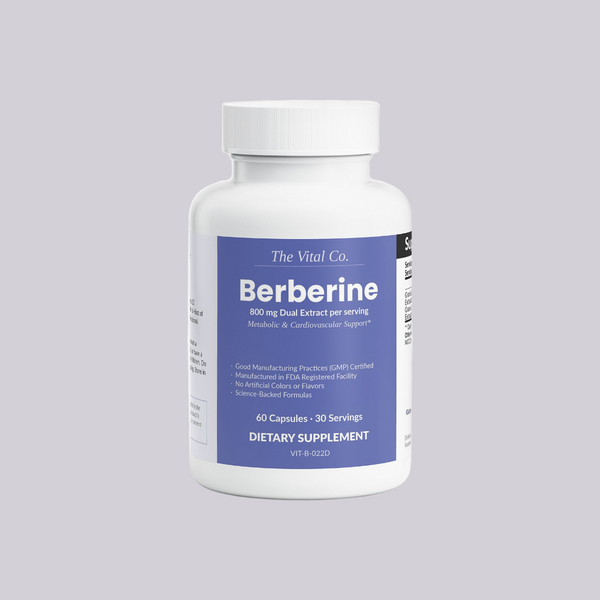
Berberine has been called "nature's Ozempic" across social media — a claim that dramatically overstates the current science. This alkaloid compound, extracted from plants like barberry, goldenseal, and Oregon grape, has a long history in traditional Chinese and Ayurvedic medicine. But what does the clinical evidence actually say about berberine and weight loss?
This article is for informational purposes only and does not constitute medical advice. Consult your physician before starting any supplement.
What Is Berberine?
Berberine is a bioactive alkaloid found in several plants, including Berberis vulgaris (barberry), Coptis chinensis (goldthread), and Hydrastis canadensis (goldenseal). It has been used for centuries in traditional medicine systems, primarily for gastrointestinal complaints and infections. In modern research, berberine has attracted attention for its effects on blood sugar regulation, cholesterol levels, and — more recently — body weight management.
The compound's bright yellow color makes it easy to identify, and its bitter taste is characteristic of the isoquinoline alkaloid class to which it belongs. Berberine is typically sold as berberine hydrochloride (berberine HCl) in supplement form, though other salt forms exist.
How Berberine Affects Metabolism
To understand berberine's potential role in weight management, it helps to understand the metabolic pathways it influences. Research has identified several mechanisms through which berberine may affect energy balance and fat storage.
AMPK Activation
Berberine's most well-studied mechanism is its activation of AMP-activated protein kinase (AMPK), sometimes called the body's "metabolic master switch." AMPK is an enzyme that plays a central role in cellular energy regulation. When activated, AMPK promotes glucose uptake, increases fatty acid oxidation, and inhibits fat synthesis. Some researchers have compared berberine's AMPK-activating effect to that of metformin, the widely prescribed diabetes medication, though the two compounds work through somewhat different upstream pathways.
Effects on Fat Cells
Preliminary research suggests berberine may influence adipose tissue in multiple ways. Some evidence indicates it can inhibit the differentiation of preadipocytes (immature fat cells) into mature fat cells, potentially reducing fat storage capacity. There is also emerging interest in whether berberine can influence the balance between white adipose tissue (which stores energy) and brown adipose tissue (which burns energy to generate heat).
A 2026 study by Zhang W, Feng Y, Gao C et al. investigated a novel berberine derivative called B12 and found it exhibited anti-obesity effects in animal models by targeting both brown and white adipocyte dynamics — promoting brown fat activity while reducing white fat accumulation.[1] While this study examined a modified derivative rather than standard berberine, it provides mechanistic insight into how berberine-class compounds may interact with fat tissue biology. It is important to note this was a preclinical study, and human clinical trials are still needed to confirm whether these effects translate to people.
Gut Microbiome Modulation
An often-overlooked aspect of berberine's metabolic effects involves the gut microbiome. Some evidence suggests berberine can alter the composition of gut bacteria in ways that may influence energy extraction from food, gut hormone signaling, and systemic inflammation — all factors that can affect body weight. Berberine's notably poor oral bioavailability (estimated at less than 5%) may actually work in its favor here, as the majority of an oral dose remains in the gastrointestinal tract where it can interact with gut microbes.
Berberine and Body Weight: Reviewing the Human Trials
The relationship between berberine and weight loss has been examined in a number of clinical trials, though the evidence base has important limitations that must be acknowledged.
What Meta-Analyses Have Found
Several meta-analyses have pooled data from randomized controlled trials examining berberine's metabolic effects. These analyses generally report modest but statistically significant reductions in body weight and BMI with berberine supplementation compared to placebo. Reported average weight loss in these analyses typically ranges from 1 to 2 kilograms over study periods of 8 to 24 weeks.
However, these meta-analyses come with important caveats. Many of the included trials were conducted in populations with existing metabolic conditions — type 2 diabetes, polycystic ovary syndrome (PCOS), or metabolic syndrome — rather than in otherwise healthy individuals seeking weight loss. This means the results may not generalize to the broader population. Additionally, many studies were relatively small (often under 100 participants) and short in duration.
Berberine in Metabolic Syndrome
Some of the most consistent evidence for berberine's weight-related effects comes from studies in people with metabolic syndrome or insulin resistance. In these populations, berberine's blood sugar-lowering and lipid-modifying effects may contribute to modest weight reduction as a secondary benefit. Some evidence suggests that improvements in insulin sensitivity can help reduce the visceral fat accumulation that characterizes metabolic syndrome.
Berberine in PCOS
Several small trials have examined berberine in women with PCOS, a condition frequently associated with insulin resistance and weight gain. Preliminary research indicates berberine may help reduce body weight and improve hormonal profiles in this population, though sample sizes have been small and larger confirmatory trials are needed.
Limitations of the Current Evidence
It is important to be candid about what the evidence does and does not show. The current body of research on berberine and weight loss has several notable limitations:
- Small sample sizes: Most trials have enrolled fewer than 100 participants, limiting statistical power.
- Short duration: Few studies have followed participants beyond 12-16 weeks, leaving long-term effects uncertain.
- Heterogeneous populations: Studies have varied widely in the health status of participants, making direct comparisons difficult.
- Geographic concentration: A disproportionate number of trials have been conducted in China, raising questions about generalizability across different genetic backgrounds and dietary patterns.
- Variable quality: Study quality varies, with some trials lacking proper blinding or intention-to-treat analysis.
- Modest effect sizes: Even in positive studies, the magnitude of weight loss is modest compared to prescription anti-obesity medications.
Next-Generation Berberine Derivatives: Emerging Research
Recognizing the limitations of standard berberine — particularly its poor bioavailability and the gastrointestinal side effects that come with higher doses — researchers have begun developing modified berberine compounds designed to improve efficacy.
Zhang W, Feng Y, Gao C et al. (2026) published research on a novel berberine derivative designated B12, which demonstrated superior anti-obesity effects compared to standard berberine in preclinical models. The study, published in the International Journal of Obesity, found that B12 influenced both brown and white adipocyte dynamics — enhancing thermogenic brown fat activity while reducing white fat accumulation.[1]
This type of derivative research is still in early stages. While it suggests that the berberine chemical scaffold has untapped potential for metabolic applications, these findings come from animal studies and cannot be directly applied to human supplementation decisions. Human clinical trials will be necessary to determine whether such derivatives offer meaningful advantages over standard berberine for weight management.
Beyond the Scale: Berberine's Metabolic Effects
Even if berberine's direct effect on body weight is modest, its broader metabolic profile may be relevant to people interested in weight management. Weight loss does not occur in isolation — it is deeply intertwined with blood sugar regulation, lipid metabolism, and inflammatory status.
Blood Sugar Regulation
Berberine's best-established clinical effect is its ability to lower blood glucose levels. Multiple meta-analyses of randomized controlled trials have reported significant reductions in fasting blood glucose and HbA1c (a marker of long-term blood sugar control) with berberine supplementation. Some evidence suggests these effects are comparable in magnitude to metformin, though head-to-head comparisons are limited.
For individuals whose weight management challenges are driven in part by insulin resistance and blood sugar dysregulation, berberine's glucose-lowering effects could provide indirect support for weight management efforts.
Lipid Profile
Preliminary research indicates berberine may favorably affect cholesterol levels, with some studies reporting reductions in total cholesterol, LDL cholesterol, and triglycerides. The mechanism appears to involve upregulation of LDL receptors in the liver, increasing the clearance of LDL particles from the bloodstream.
Gut Health and Inflammation
Berberine has demonstrated notable anti-inflammatory properties in preclinical research. Several recent studies have examined berberine's effects on intestinal inflammation, which is increasingly recognized as a contributor to metabolic dysfunction and obesity.
Zhang M, Wei S, Luo Z et al. (2026) demonstrated in an animal model that berberine alleviated colitis induced by Citrobacter rodentium through a mechanism involving reduced epithelial gasdermin E-mediated pyroptosis — a form of inflammatory cell death. Published in the International Journal of Molecular Sciences, this study adds to evidence that berberine exerts protective effects on the intestinal barrier.[2]
Similarly, Liu X, Guo L, Guo L et al. (2026) published research in the Journal of Cellular and Molecular Medicine investigating berberine's potential role in treating radiation-induced intestinal injury, further demonstrating the compound's gastrointestinal protective properties.[3]
While these studies focused on specific forms of intestinal damage rather than obesity directly, they are relevant because gut barrier dysfunction and chronic low-grade intestinal inflammation are increasingly linked to metabolic disruption and weight gain. A healthier gut environment may support better metabolic function, though direct evidence linking berberine's gut-protective effects to weight loss in humans remains limited.
Dosing: What the Studies Used
Understanding the doses used in clinical research is essential for anyone considering berberine supplementation.
Standard Dosing in Clinical Trials
The most commonly studied dose of berberine in human clinical trials is 500 mg taken two to three times daily, for a total daily dose of 1,000 to 1,500 mg. This dose range has been used in the majority of metabolic studies, including those examining blood sugar, cholesterol, and body weight outcomes.
Dosing Considerations
- Divided doses: Berberine is almost always administered in divided doses (two or three times daily with meals) rather than as a single daily dose. This approach accounts for berberine's relatively short half-life and may reduce gastrointestinal side effects.
- Dose escalation: Some studies and clinicians recommend starting at a lower dose (e.g., 500 mg once daily) and gradually increasing to reduce the likelihood of digestive discomfort.
- Timing with meals: Most trials administered berberine shortly before or with meals, which aligns with its blood sugar-lowering mechanism and may improve tolerability.
- Upper limits: Doses above 1,500 mg per day have not been well studied in long-term trials and are generally not recommended.
Safety and Side Effects
Berberine is generally well tolerated at standard doses, but it is not without risks, particularly regarding drug interactions.
Common Side Effects
The most frequently reported side effects of berberine are gastrointestinal in nature:
- Diarrhea
- Constipation
- Flatulence
- Stomach cramps or discomfort
- Nausea
These side effects tend to be dose-dependent and are most common during the first one to two weeks of supplementation. Starting with a lower dose and gradually increasing can mitigate these effects for many people.
Drug Interactions
Berberine has clinically significant interactions with several medication classes that require careful attention:
- Diabetes medications: Berberine can lower blood sugar, and combining it with metformin, sulfonylureas, or insulin may increase hypoglycemia risk. Blood glucose monitoring is essential.
- Blood thinners: Berberine may inhibit CYP enzymes involved in metabolizing warfarin and other anticoagulants, potentially increasing bleeding risk.
- CYP3A4 substrates: Berberine inhibits cytochrome P450 3A4, an enzyme responsible for metabolizing many common medications, including statins, calcium channel blockers, and certain immunosuppressants. This can increase blood levels of these drugs to potentially dangerous concentrations.
- CYP2D6 substrates: Similar concerns exist for drugs metabolized by CYP2D6, including some antidepressants and beta-blockers.
- Cyclosporine: Berberine can significantly increase cyclosporine levels and should not be combined without medical supervision.
Contraindications
- Pregnancy and breastfeeding: Berberine should be avoided during pregnancy as it can cross the placenta and may cause harm to the fetus. It is also not recommended during breastfeeding.
- Children: Insufficient safety data exists for pediatric use.
- Liver or kidney disease: Individuals with significant hepatic or renal impairment should exercise caution and consult their physician, as berberine is metabolized by the liver.
What to Look For in a Supplement
Based on the research reviewed above, here are evidence-derived criteria for evaluating a berberine supplement:
Dose and Form
Clinical trials have predominantly used berberine hydrochloride (berberine HCl) at doses of 500 mg per capsule, taken two to three times daily. Look for supplements providing 500 mg of berberine HCl per serving to match the clinically studied dose. Some newer formulations use dihydroberberine, a metabolite of berberine with reportedly improved bioavailability, though the clinical evidence base for this form is smaller.
Bioavailability Considerations
Berberine's poor oral bioavailability is a well-documented limitation. Some supplement manufacturers address this with delivery technologies designed to improve absorption — such as phytosome complexes (berberine bound to phospholipids) or delayed-release capsules. While the rationale is sound, consumers should look for supplements that provide specific bioavailability data rather than relying on marketing claims alone.
Quality Markers
- Third-party testing: Look for products tested by independent organizations such as NSF International, USP, or ConsumerLab. This verifies that the product contains what the label claims and is free from contaminants.
- GMP certification: The manufacturing facility should follow Good Manufacturing Practices as required by the FDA for dietary supplements.
- Minimal additives: The clinical evidence is based on berberine HCl without extensive additional ingredients. While some combination products exist, the evidence supporting specific proprietary blends is generally weaker than for berberine alone.
- Standardization: The supplement should state the percentage of berberine alkaloid content or specify the amount of active berberine per serving.
The Bottom Line
The evidence for berberine and weight loss is moderate at best. Human clinical trials suggest berberine can produce modest reductions in body weight — typically 1 to 2 kilograms over 8 to 24 weeks — primarily in individuals with existing metabolic conditions such as type 2 diabetes, metabolic syndrome, or PCOS. Its strongest evidence lies in blood sugar and lipid management rather than weight loss specifically. Individuals with insulin resistance or metabolic dysfunction may benefit most, as berberine's metabolic effects could support weight management as part of a comprehensive approach that includes diet and exercise. Emerging research into next-generation berberine derivatives[1] may eventually expand the clinical toolkit, but standard berberine remains the only form with a meaningful human evidence base.

Frequently Asked Questions
Is berberine really "nature's Ozempic"?
No. This comparison is misleading. GLP-1 receptor agonists like semaglutide (Ozempic) produce average weight loss of 10-15% of body weight in clinical trials. Berberine's observed effects are far more modest — typically 1-2 kilograms. The two compounds also work through entirely different mechanisms. Berberine primarily activates AMPK and affects glucose metabolism, while GLP-1 agonists mimic a gut hormone that regulates appetite and gastric emptying.
How long does it take for berberine to affect body weight?
Most clinical trials that reported weight-related outcomes ran for 8 to 24 weeks. Some evidence suggests metabolic improvements (blood sugar and lipid changes) may begin within the first 4 weeks, but measurable changes in body weight typically require at least 8 to 12 weeks of consistent use. Individual responses vary considerably.
Can I take berberine with metformin?
Both berberine and metformin lower blood sugar through overlapping mechanisms. Combining them increases the risk of hypoglycemia (dangerously low blood sugar) and gastrointestinal side effects. If you are taking metformin or any diabetes medication, do not add berberine without consulting your physician, who can monitor your blood glucose and adjust your medication if needed.
Does berberine need to be taken with food?
Most clinical trials administered berberine with meals, and this is generally recommended for two reasons. First, taking berberine with food may reduce the gastrointestinal side effects that are common when it is taken on an empty stomach. Second, berberine's blood sugar-lowering effects are most relevant during the postprandial (post-meal) period, when blood glucose naturally rises.
Who should avoid berberine supplements?
Berberine should be avoided by pregnant or breastfeeding women, children, and individuals with significant liver or kidney disease. Anyone taking prescription medications — particularly diabetes drugs, blood thinners, statins, or immunosuppressants — should consult their physician before starting berberine due to the risk of drug interactions through CYP enzyme inhibition.
References
- Zhang W, Feng Y, Gao C et al. "A novel berberine derivative B12 exhibits superior anti-obesity effects via targeting brown and white adipocyte dynamics." International Journal of Obesity, 2026. DOI: https://doi.org/10.1038/s41366-026-02153-9
- Zhang M, Wei S, Luo Z et al. "Berberine Alleviates Citrobacter rodentium-Induced Colitis with Reduced Epithelial Gasdermin E-Mediated Pyroptosis." International Journal of Molecular Sciences, 27(15), 6820, 2026. DOI: [[DOI unavailable] unavailable]
- Liu X, Guo L, Guo L et al. "The Role and Mechanism of Berberine as a Candidate Drug for the Treatment of Radiation-Induced Intestinal Injury." Journal of Cellular and Molecular Medicine, 2026. DOI: [[DOI unavailable] unavailable]