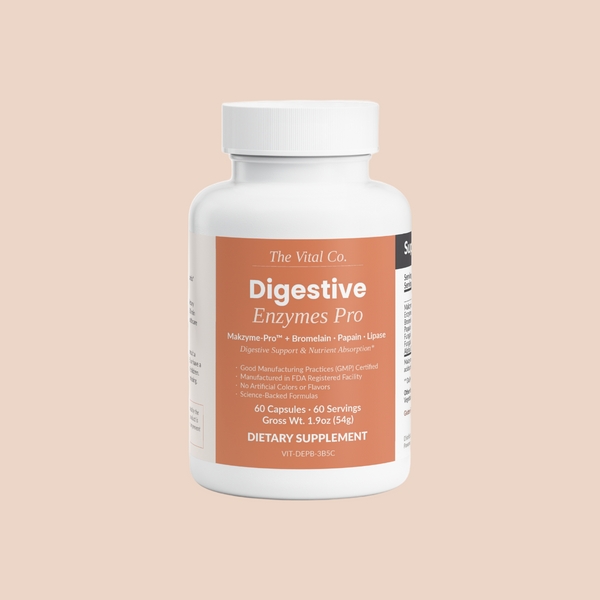
Digestive enzyme supplements have become one of the fastest-growing categories in the supplement industry, driven by rising rates of functional digestive complaints. But choosing the best digestive enzymes supplement requires understanding what these enzymes actually do, which ones have clinical support, and who is most likely to benefit. This guide breaks down the science behind digestive enzyme supplementation so you can make an informed decision.
This article is for informational purposes only and does not constitute medical advice. Consult your physician before starting any supplement.
Table of Contents
- What Are Digestive Enzymes and Why Do They Matter?
- The Major Types of Digestive Enzymes in Supplements
- Who Actually Benefits from Enzyme Supplementation?
- Clinical Evidence for Common Enzyme Supplements
- How to Evaluate a Digestive Enzyme Supplement
- Dosing: What the Studies Used
- Safety and Side Effects
- Frequently Asked Questions
- References
What Are Digestive Enzymes and Why Do They Matter?
Digestive enzymes are proteins produced by the body — primarily in the salivary glands, stomach, pancreas, and small intestine — that break down food into absorbable nutrients. Without adequate enzyme activity, even a nutrient-dense diet can result in malabsorption, bloating, gas, and other gastrointestinal discomfort.
The body produces dozens of digestive enzymes, each with a specific substrate. Amylase breaks down starches into simple sugars. Proteases (including pepsin and trypsin) cleave proteins into amino acids. Lipase emulsifies and digests dietary fats. Lactase specifically targets the milk sugar lactose. When any of these enzymes are deficient — whether due to aging, pancreatic insufficiency, genetic variation, or chronic gut inflammation — digestion can become incomplete, leading to symptoms that range from mild discomfort to significant malnutrition.
Supplemental digestive enzymes aim to compensate for these deficiencies. However, it is important to understand that not all enzyme supplements are equivalent, and the clinical evidence varies substantially depending on the enzyme type, the underlying condition, and the formulation used.
The Major Types of Digestive Enzymes in Supplements
Pancreatic Enzyme Replacement Therapy (PERT)
Prescription pancreatic enzymes — containing lipase, protease, and amylase derived from porcine pancreas — represent the most clinically validated category of digestive enzyme therapy. These are FDA-regulated medications (such as pancrelipase) prescribed for exocrine pancreatic insufficiency (EPI) associated with chronic pancreatitis, cystic fibrosis, and pancreatic surgery. PERT has robust clinical evidence supporting its use in these specific conditions and is considered standard of care, not merely a supplement.
Fungal- and Plant-Derived Enzyme Blends
Most over-the-counter digestive enzyme supplements contain enzymes derived from fungal sources (commonly Aspergillus niger or Aspergillus oryzae) or plant sources (bromelain from pineapple, papain from papaya). These enzymes have broader pH stability than animal-derived enzymes, meaning they may remain active across a wider range of gastrointestinal conditions. However, the clinical evidence supporting their use in healthy individuals with occasional digestive discomfort is considerably less robust than for prescription PERT.
Lactase
Lactase supplements are among the most straightforward enzyme supplements. Lactose intolerance affects an estimated 65–70% of the global adult population, and exogenous lactase taken immediately before consuming dairy can effectively hydrolyze lactose in the stomach and upper small intestine. Multiple controlled trials have demonstrated symptomatic improvement with lactase supplementation in lactose-intolerant individuals, making this one of the better-supported uses of digestive enzyme supplements.
Alpha-Galactosidase
Alpha-galactosidase (the enzyme in products like Beano) breaks down oligosaccharides found in beans, cruciferous vegetables, and other high-fiber foods. Some evidence suggests it can reduce gas production when taken with meals containing these foods, though the quality of available clinical trials is mixed, with most studies being small and short-duration.
Dipeptidyl Peptidase IV (DPP-IV)
DPP-IV is marketed as a gluten-digesting enzyme, with some supplement manufacturers claiming it can help individuals with gluten sensitivity. It is critical to note that no enzyme supplement has been demonstrated to be safe or effective for individuals with celiac disease. DPP-IV may partially degrade gluten peptides, but it cannot fully digest the immunogenic sequences rapidly enough to prevent mucosal damage in celiac patients. Preliminary research indicates it may reduce symptoms from trace gluten exposure in non-celiac gluten sensitivity, but the evidence remains limited.
Who Actually Benefits from Enzyme Supplementation?
The clinical utility of digestive enzyme supplements varies dramatically depending on the underlying condition:
Well-Established Benefit
Exocrine pancreatic insufficiency (EPI): Patients with EPI from chronic pancreatitis, cystic fibrosis, or pancreatic resection have a clear, well-documented need for enzyme replacement. In this population, PERT reduces steatorrhea, improves fat absorption, and prevents malnutrition. This is a medical indication, not a consumer supplement choice.
Lactose intolerance: Lactase supplementation before dairy consumption has consistent evidence of reducing symptoms in lactose-intolerant individuals. The mechanism is straightforward, the condition is easily diagnosed, and the intervention is well-targeted.
Moderate or Emerging Evidence
Functional dyspepsia: Some evidence suggests that multi-enzyme preparations may improve symptoms in patients with functional dyspepsia — a condition characterized by upper abdominal pain, bloating, and early satiety without identifiable structural cause. Several clinical trials have shown symptom improvement with fungal-derived enzyme blends, though study quality has been variable, and the mechanisms are not fully understood.
Age-related enzyme decline: Pancreatic enzyme output decreases with age, though clinically significant deficiency is uncommon in otherwise healthy older adults. Some evidence suggests that enzyme supplementation may improve nutrient absorption and reduce postprandial discomfort in elderly populations, but large-scale trials are lacking.
Limited or Insufficient Evidence
General digestive discomfort in healthy adults: For individuals without a diagnosed enzyme deficiency, the evidence supporting routine digestive enzyme supplementation is weak. Many symptoms attributed to enzyme insufficiency — bloating, gas, irregular stools — may actually reflect dietary factors, gut motility disorders, stress, or microbiome imbalances that enzyme supplements would not address.
Irritable bowel syndrome (IBS): While some preliminary research indicates that enzyme supplementation may reduce certain IBS symptoms, results have been inconsistent across studies, and current IBS treatment guidelines do not include enzyme supplements as a recommended intervention.
Clinical Evidence for Common Enzyme Supplements
Pancreatic Enzymes for EPI
The evidence base for PERT in exocrine pancreatic insufficiency is extensive. Multiple randomized controlled trials have demonstrated significant improvements in fat absorption (measured by coefficient of fat absorption), stool frequency, and nutritional status. Clinical guidelines from gastroenterology societies worldwide recommend PERT as first-line treatment for EPI. Notably, the dosing is weight-based and condition-specific, typically starting at 500 lipase units per kilogram of body weight per meal, titrated to symptom response.
Bromelain
Bromelain, a mixture of proteolytic enzymes from pineapple stem, has been studied in several clinical contexts beyond digestion, including inflammation, sinusitis, and surgical recovery. As a digestive aid, some clinical trials suggest that bromelain can improve protein digestion and reduce bloating when taken with protein-rich meals. However, many of these studies are older, use small sample sizes, and have methodological limitations. The typical doses studied range from 200 to 2,000 mg per day, with higher doses associated with anti-inflammatory rather than digestive effects.
Papain
Papain, derived from papaya, is another proteolytic enzyme commonly included in digestive supplement formulations. Preliminary research indicates it may aid protein digestion and reduce symptoms of bloating and constipation, but high-quality human clinical trials are limited. Most available data comes from in-vitro studies or small uncontrolled trials.
Multi-Enzyme Formulations
Several clinical trials have evaluated combination enzyme products containing multiple enzyme types. Some evidence suggests that broad-spectrum formulations combining proteases, lipases, and amylases may be more effective than single-enzyme products for general digestive support, likely because real meals contain a mixture of macronutrients. However, the heterogeneity of products tested makes it difficult to draw firm conclusions about optimal formulations.
The Gut Microbiome Connection
An emerging area of research examines how digestive enzyme supplementation interacts with the gut microbiome. Incomplete digestion can lead to increased substrate availability for fermentative bacteria in the colon, potentially contributing to gas, bloating, and altered microbial balance. Some evidence suggests that improving digestion upstream with enzyme supplementation may positively influence microbiome composition and short-chain fatty acid production. Research on synbiotic delivery systems — combining probiotics with protective encapsulation to survive gastric conditions — has shown that such approaches can modulate gut microbiota composition and fecal metabolite profiles, highlighting the interconnection between digestive function and microbial ecology.[1]
How to Evaluate a Digestive Enzyme Supplement
If you and your healthcare provider determine that a digestive enzyme supplement may be appropriate, consider the following criteria when selecting a product:
Enzyme Activity Units, Not Just Milligrams
The most important measure of an enzyme supplement's potency is its activity level, measured in standardized units (such as FCC units in the United States), not the weight of enzyme protein in milligrams. A supplement listing "100 mg lipase" without specifying activity units tells you very little about its actual digestive capacity. Look for products that specify activity — for example, lipase activity in FIP or LU units, protease in HUT units, and amylase in DU units.
pH Stability
Enzymes are active within specific pH ranges. Gastric acid (pH 1.5–3.5) can denature many enzymes before they reach the small intestine where most digestion occurs. Enteric-coated formulations or acid-stable enzyme sources (such as fungal-derived enzymes) are generally preferable. Prescription PERT products use enteric-coated microspheres specifically to protect lipase from gastric acid degradation.
Formulation Matching
Choose an enzyme supplement that matches your specific digestive concern. If dairy causes symptoms, a targeted lactase supplement is more rational than a broad-spectrum enzyme blend. If high-fat meals are problematic, look for adequate lipase activity. If general postprandial bloating is the issue, a multi-enzyme formulation may be more appropriate.
Third-Party Testing
Because dietary supplements are not subject to the same regulatory scrutiny as pharmaceuticals, third-party verification (USP, NSF International, or ConsumerLab) provides additional assurance of label accuracy, purity, and the absence of contaminants. This is particularly important for enzyme supplements, where the declared activity level needs to match actual potency.
Dosing: What the Studies Used
Dosing for digestive enzyme supplements varies considerably by enzyme type and clinical context:
Pancreatic enzymes (PERT): Clinical trials in EPI typically use 25,000–75,000 lipase units per meal, with dosing adjusted based on fat content of the meal and clinical response. These are prescription products with well-established dosing guidelines.
Lactase: Studies have generally used 6,000–9,000 FCC units of lactase taken immediately before consuming dairy, with some trials testing doses up to 15,000 FCC units for individuals with more severe lactose intolerance.
Bromelain: Clinical trials have used doses ranging from 200 mg to 2,000 mg per day, typically standardized to GDU (gelatin digesting units). For digestive support, doses at the lower end of this range (200–500 mg with meals) are more commonly studied, while anti-inflammatory applications use higher doses.
Alpha-galactosidase: Studies have typically used 300–1,200 GalU (galactose units) per meal containing oligosaccharide-rich foods.
Multi-enzyme formulations: Dosing varies widely across studies and products, making direct comparisons difficult. Most clinical trials instruct participants to take 1–2 capsules of the investigational product with each major meal.
It is important to note that more is not necessarily better with enzyme supplementation. Excessive protease intake, for example, may irritate the gastrointestinal lining, and very high lipase doses have been associated with a rare condition called fibrosing colonopathy in pediatric cystic fibrosis patients receiving pancreatic enzymes.
Safety and Side Effects
Digestive enzyme supplements are generally well-tolerated, but they are not without risks:
Common side effects: Nausea, diarrhea, and abdominal cramping can occur, particularly with higher doses or when initiating supplementation. These symptoms typically resolve with dose adjustment.
Allergic reactions: Individuals with pineapple or papaya allergies should avoid supplements containing bromelain or papain, respectively. Porcine-derived enzymes are contraindicated for individuals with pork allergies or those who avoid pork for religious reasons.
Drug interactions: Digestive enzymes may interact with several medication classes. Bromelain may enhance the absorption of certain antibiotics and can increase bleeding risk when combined with anticoagulants such as warfarin. Pancreatic enzymes can interfere with the absorption of folate and iron supplements. Papain may potentiate the effects of blood-thinning medications. Always inform your healthcare provider of all supplements you are taking.
Contraindications: Enzyme supplements should be used cautiously in individuals with active peptic ulcers, acute pancreatitis, or known hypersensitivity to any enzyme source. Pregnant and breastfeeding women should consult their physician before use, as safety data in these populations is limited for most enzyme supplements.
The celiac disease warning: No digestive enzyme supplement — including DPP-IV formulations — should be used as a substitute for a strict gluten-free diet in celiac disease. Marketing claims suggesting otherwise are not supported by clinical evidence and are potentially dangerous.

Frequently Asked Questions
Can taking digestive enzymes long-term reduce your body's own enzyme production?
This is a common concern, but current evidence does not support it. The body's production of digestive enzymes is regulated by hormonal signals (such as cholecystokinin and secretin) triggered by the presence of food in the digestive tract, not by the presence of exogenous enzymes. Long-term PERT use in patients with cystic fibrosis and chronic pancreatitis has not been shown to further reduce endogenous enzyme secretion. That said, long-term studies specifically examining this question in healthy adults taking over-the-counter enzyme supplements are limited.
Should digestive enzymes be taken before, during, or after meals?
Most clinical trials instruct participants to take enzymes immediately before or at the start of a meal. This timing allows the enzymes to mix with food in the stomach and be delivered to the small intestine alongside the chyme. For prescription PERT, guidelines specifically recommend taking enzymes with the first bite of food. Taking enzymes on an empty stomach between meals serves a different purpose — systemic proteolytic enzyme therapy — which is a separate application with different evidence considerations.
Are digestive enzyme supplements necessary for healthy adults?
For most healthy adults with no diagnosed enzyme deficiency, routine enzyme supplementation is not necessary. The body produces sufficient enzymes to digest a normal diet. If you experience persistent digestive symptoms, it is more productive to investigate the underlying cause — which could range from food intolerances and small intestinal bacterial overgrowth to stress and dietary patterns — rather than defaulting to enzyme supplementation. Enzymes are most appropriate for specific, identifiable deficiencies.
What is the difference between prescription and over-the-counter digestive enzymes?
Prescription pancreatic enzyme products (PERT) are FDA-approved drugs with standardized potency, enteric coating, and clinical evidence in specific disease states. Over-the-counter enzyme supplements are regulated as dietary supplements, meaning they are not required to demonstrate efficacy before being marketed and may have more variable potency. The clinical evidence base is substantially stronger for prescription products. That said, over-the-counter lactase and alpha-galactosidase products have reasonable evidence supporting their targeted uses.
Can digestive enzymes help with food allergies or intolerances?
Digestive enzymes can help with specific food intolerances caused by enzyme deficiencies — lactose intolerance being the clearest example. However, they do not address true food allergies, which involve immune-mediated responses to food proteins regardless of how well those proteins are digested. Enzyme supplements should never be used as a strategy to consume foods to which you have a known allergy.
References
- Subhash AJ, Babatunde GB, Arachchi MJP et al. "Synbiotic alginate microcapsules incorporating a date seed polysaccharide-stabilized Pickering emulsion improve probiotic gastrointestinal survival and modulate SCFA production, gut microbiota, and fecal metabolome." International Journal of Biological Macromolecules, 2026. DOI: 10.1016/j.ijbiomac.2026.153313