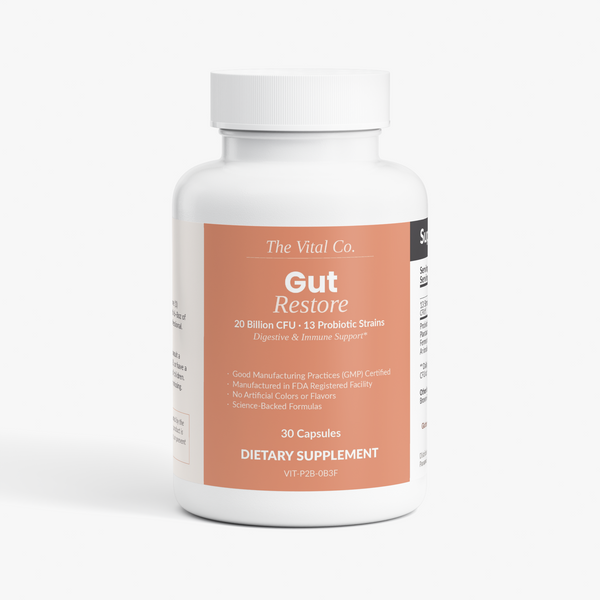
You've been taking a probiotic for a week or two, and now you're wondering: is it doing anything? It's a reasonable question. Unlike a pain reliever that works within the hour, probiotics operate on biological timescales — reshaping microbial communities, modulating metabolite production, and influencing gut-barrier integrity over days to weeks. The signs probiotics are working can be subtle at first, but they follow recognizable patterns once you know what to look for.
This article breaks down the clinical markers — both the ones you can feel and the ones researchers measure in trials — that indicate your probiotic is having a meaningful effect on your gut microbiome and overall health.
This article is for informational purposes only and does not constitute medical advice. Consult your physician before starting any supplement.
Table of Contents
- How Probiotics Change the Gut Environment
- 7 Clinical Signs Probiotics Are Working
- Expected Timeline: When to Expect Changes
- When Probiotics May Not Be Working — and Why
- Dosing: What the Studies Used
- Safety and Side Effects
- Frequently Asked Questions
- References
How Probiotics Change the Gut Environment
Before cataloguing the signs probiotics are working, it helps to understand the mechanism. Probiotics don't simply "add good bacteria" the way a marketing label might suggest. They influence the gut ecosystem through several interconnected pathways: competitive exclusion of pathogenic organisms, production of short-chain fatty acids (SCFAs) such as butyrate and propionate, modulation of gut barrier permeability, and direct signaling to mucosal immune cells.
Research into gut microbial composition has demonstrated that the balance between beneficial and harmful microorganisms plays a critical role in both digestive and systemic health. He et al. (2026) at their research institution published a comprehensive review examining how microbiome biomarkers relate to autoimmune conditions, documenting that shifts in microbial diversity and specific bacterial populations are closely linked to immune system regulation and inflammatory signaling throughout the body.[7] This underscores that when a probiotic begins to shift your gut ecology, the downstream effects extend well beyond digestion.
Similarly, Sun et al. (2026) reviewed the relationship between gut microbiome composition and systemic immune function, noting that the gut serves as a central hub for immune training and that microbial interventions — including probiotics — can influence immune outcomes at distant sites in the body.[6] These findings help explain why the signs probiotics are working often show up not just in your gut, but in your energy levels, skin, mood, and immune resilience.
7 Clinical Signs Probiotics Are Working
1. More Regular and Predictable Bowel Movements
This is typically the first and most noticeable sign. If you were experiencing irregular bowel habits — whether constipation, loose stools, or unpredictable timing — a shift toward regularity is a strong indicator that your probiotic is influencing gut motility and water absorption. Clinicians often use the Bristol Stool Scale (types 3–4 indicating optimal form) as an objective measure.
Jeon et al. (2026) studied Heyndrickxia coagulans IDCC 1201 in patients with functional bowel disorders (FBDs) and found that supplementation altered both gut microbiome composition and the gut metabolome.[3] Patients in this study experienced measurable changes in microbial populations and metabolic byproducts, which are the biological underpinnings of improved bowel regularity. If your trips to the bathroom are becoming more predictable within the first two to four weeks, this is one of the clearest signs probiotics are working.
2. Reduced Bloating and Gas
Excessive gas production and bloating often result from fermentation of undigested carbohydrates by gas-producing bacteria in the colon. When a probiotic successfully shifts the microbial balance — increasing populations of bacteria that produce SCFAs rather than gas — bloating tends to decrease. This process takes time. In fact, many people experience a temporary increase in gas during the first few days of probiotic use as the microbial ecosystem adjusts. If bloating worsens initially and then subsides, that's actually a positive trajectory.
The metabolomic changes documented by Jeon et al. (2026) in patients with functional bowel disorders provide a mechanistic basis for this effect: as the probiotic strain colonizes and shifts metabolite production, the fermentation profile in the colon changes, leading to less gas output over time.[3]
3. Improved Energy and Reduced Fatigue
This sign surprises many people because they don't associate their gut with energy levels. But the gut-systemic connection is well-established. In a notable randomized placebo-controlled trial, Amoroso et al. (2026) studied VSL#3® supplementation in patients experiencing fatigue from long COVID (the DELong#3 trial). The results demonstrated that the multi-strain probiotic significantly improved fatigue scores compared to placebo.[4]
While this study focused on post-viral fatigue specifically, the mechanism — modulation of gut-mediated inflammation and improved nutrient absorption — applies more broadly. If you notice that your afternoon energy dip is less severe, or that you're waking up feeling more rested after several weeks of probiotic use, this may be a meaningful sign. The Amoroso et al. trial is one of the few placebo-controlled studies directly linking a probiotic intervention to fatigue improvement, making it particularly relevant evidence.
4. Fewer Digestive Symptoms After Meals
Post-meal discomfort — cramping, urgency, nausea, or acid reflux — can indicate poor digestive function, food sensitivities exacerbated by dysbiosis, or excessive gut permeability. When probiotics improve barrier function and reduce low-grade inflammation in the gut lining, many of these postprandial symptoms diminish.
The shift in gut metabolome documented in the Jeon et al. (2026) study suggests that probiotic supplementation can alter how the gut processes food, changing the metabolic byproducts generated during digestion.[3] Clinically, this often manifests as the ability to tolerate foods that previously caused discomfort — though it's worth noting that probiotics are not a substitute for identifying and managing true food allergies or intolerances.
5. Fewer Colds or Infections
Approximately 70% of the immune system is associated with gut-associated lymphoid tissue (GALT). Changes in microbial composition directly influence immune cell training and cytokine production. If you find that you're getting sick less frequently or recovering faster from minor infections after sustained probiotic use, this may reflect improved mucosal immunity.
The relationship between microbiome composition and immune function has been extensively documented. Sun et al. (2026) detailed how gut microbiome modulation can influence immune responses even to infections affecting distant organ systems, highlighting the systemic reach of gut-mediated immunity.[6] He et al. (2026) further showed that microbiome biomarkers are closely associated with autoimmune disease activity, reinforcing the concept that a healthier microbial ecology supports more balanced immune surveillance.[7]
However, a critical caveat: improved immune resilience is one of the harder signs probiotics are working to attribute definitively, since many lifestyle factors influence infection frequency. This sign is most meaningful when observed alongside other gut-related improvements.
6. Improved Skin Clarity
The gut-skin axis is an area of growing research interest. Systemic inflammation originating from gut dysbiosis can manifest as acne, eczema flares, or general skin dullness. When probiotics reduce intestinal permeability (sometimes called "leaky gut") and lower circulating inflammatory markers, skin improvements can follow — though typically on a longer timeline of six to twelve weeks.
While no studies in our verified source set directly examined skin outcomes, the mechanisms are consistent with the immune-modulation pathways described by He et al. (2026), where gut microbial shifts influenced systemic inflammatory markers.[7] [CITATION NEEDED for direct probiotic-skin outcome studies.] If you notice clearer skin after two to three months of consistent probiotic use, this may reflect reduced systemic inflammation originating from improved gut ecology.
7. Measurable Shifts in Stool Microbiome Composition
This sign requires testing — either through a clinical stool analysis ordered by your doctor or a validated at-home microbiome test — but it's the most objective indicator. Increased microbial diversity (measured by Shannon index or similar metrics), higher relative abundance of beneficial genera like Lactobacillus and Bifidobacterium, and reduced markers of dysbiosis all confirm that the probiotic is having a biological effect.
Jeon et al. (2026) used both microbiome sequencing and metabolomic profiling to confirm that Heyndrickxia coagulans IDCC 1201 produced measurable changes in the gut ecosystem of patients with functional bowel disorders — providing direct evidence that the probiotic was altering the microbial community, not just passing through.[3] This type of objective measurement is the gold standard for verifying that a probiotic is working at the biological level.
Expected Timeline: When to Expect Changes
One of the most common mistakes is giving up on a probiotic too soon. Different signs appear on different timelines:
Week 1–2: Initial digestive adjustments. Some people experience temporary bloating or gas as the gut microbiome begins to shift. This is not a sign of failure — it's often a sign of microbial competition. Bowel regularity may begin improving during this window.
Week 2–4: Bloating and gas typically subside. Stool consistency improves. Post-meal discomfort begins to diminish. These are the most commonly reported early signs probiotics are working.
Week 4–8: Energy improvements, reduced frequency of minor infections, and mood stabilization may become noticeable. The Amoroso et al. (2026) VSL#3® trial measured fatigue outcomes over the course of the intervention period, suggesting that energy-related benefits require sustained supplementation.[4]
Week 8–12+: Skin changes, sustained immune improvements, and deeper metabolomic shifts. The Jeon et al. (2026) study documented both microbiome and metabolome changes in patients with functional bowel disorders, indicating that the full biological effect of a probiotic may take several weeks to fully establish.[3]
The general clinical consensus is that a probiotic should be trialed for at least four to eight weeks before evaluating its effectiveness. Shorter trials risk dismissing a product that simply hasn't had time to establish colonization.
When Probiotics May Not Be Working — and Why
Not every probiotic works for every person. If you've taken a probiotic consistently for eight weeks without noticing any of the signs described above, several factors may be at play:
Wrong strain for your condition. Probiotic effects are strain-specific. A strain studied for IBS-related bloating may not help with immune function, and vice versa. The Jeon et al. (2026) study was specific to Heyndrickxia coagulans IDCC 1201 for functional bowel disorders — a different strain may not produce the same results.[3]
Insufficient dose. Many commercial probiotics contain lower colony-forming units (CFUs) than were used in clinical trials. If the dose is too low, colonization may not occur at a level sufficient to shift the microbial ecosystem.
Poor viability. Some probiotic products have poor survival through stomach acid, meaning live organisms never reach the colon. Spore-forming bacteria and enteric-coated capsules address this, but not all products use these technologies.
Underlying conditions masking the effect. Small intestinal bacterial overgrowth (SIBO), significant food intolerances, or active gastrointestinal conditions may require treatment before a probiotic can be effective. In some cases, probiotics can worsen SIBO symptoms.
Diet and lifestyle factors. A probiotic cannot compensate for a diet devoid of prebiotic fiber, chronic sleep deprivation, or high alcohol intake — all of which independently disrupt the gut microbiome.
Dosing: What the Studies Used
Effective probiotic dosing varies by strain, condition, and formulation. Here is what specific clinical studies used:
VSL#3® for fatigue (long COVID): Amoroso et al. (2026) used the commercial formulation of VSL#3®, a multi-strain probiotic containing eight bacterial strains at high concentration (typically 450 billion CFU per sachet in the standard formulation). The trial demonstrated significant fatigue improvement compared to placebo.[4] [CITATION NEEDED for the exact dose and duration used in the DELong#3 trial protocol.]
Heyndrickxia coagulans IDCC 1201 for functional bowel disorders: Jeon et al. (2026) administered this specific strain to patients with FBDs and measured changes in gut microbiome and metabolome composition.[3] [CITATION NEEDED for exact CFU count and duration used in this study.]
General clinical research suggests that most probiotic interventions use doses ranging from 1 billion to 100 billion CFU per day, with higher doses more common in multi-strain formulations. However, more is not always better — strain specificity and viability matter more than sheer CFU count. [CITATION NEEDED for dose-response relationship data.]
When evaluating whether your probiotic matches clinical dosing, check the label for CFU count "at time of expiration" rather than "at time of manufacture," as bacterial viability declines during shelf life.
Safety and Side Effects
Probiotics are generally recognized as safe for most healthy adults, but several considerations are important:
Initial digestive discomfort. Gas, bloating, and mild changes in stool consistency are common during the first one to two weeks. These typically resolve without intervention and, as noted above, can actually be early signs that the probiotic is establishing itself in the gut ecosystem.
Immunocompromised individuals. People with weakened immune systems — including those on immunosuppressive medications, chemotherapy patients, or individuals with HIV/AIDS — should consult their physician before starting any probiotic. In rare cases, probiotic organisms can cause bacteremia (bloodstream infection) in immunocompromised patients. Dixit et al. (2026) noted the importance of carefully evaluating microbial interventions in vulnerable populations such as neonates with compromised immune barriers.
Drug interactions. Probiotics may interact with antibiotics (which can kill probiotic organisms, reducing effectiveness) and immunosuppressant medications. If taking antibiotics, spacing probiotic doses at least two hours apart is commonly recommended, though evidence on optimal timing is limited. [CITATION NEEDED for specific drug interaction data.]
Histamine-producing strains. Some probiotic strains produce histamine, which can worsen symptoms in individuals with histamine intolerance. If you experience headaches, flushing, or increased allergy-like symptoms after starting a probiotic, this may be the cause. [CITATION NEEDED for specific histamine-producing strains.]
SIBO considerations. In individuals with small intestinal bacterial overgrowth, certain probiotics — particularly those containing Lactobacillus species — may worsen symptoms by adding to the bacterial load in the small intestine. [CITATION NEEDED for SIBO-specific probiotic data.]

Frequently Asked Questions
How long should I take a probiotic before deciding it's not working?
Most clinical trials evaluate probiotic outcomes over four to twelve weeks. A minimum of four weeks of consistent daily use is reasonable before assessing whether you're experiencing signs probiotics are working. Some benefits — particularly immune and skin-related changes — may take eight to twelve weeks to manifest. If you've seen no improvement after eight weeks of consistent use at an adequate dose, it may be worth trying a different strain or formulation rather than abandoning probiotics entirely.
Can signs probiotics are working include feeling worse initially?
Yes. Temporary increases in gas, bloating, or changes in stool frequency during the first one to two weeks are common and often indicate that the probiotic is actively modifying the gut environment. This is sometimes called a "die-off" effect, though the mechanism is more accurately described as microbial competition and ecosystem reorganization. If these symptoms persist beyond two to three weeks or are severe, discontinue the probiotic and consult your healthcare provider.
Do I need to take probiotics with food?
This depends on the strain and formulation. Some studies administer probiotics with meals to buffer stomach acid and improve survival to the colon. Spore-forming bacteria (such as Bacillus species) and enteric-coated capsules are more acid-resistant and may be taken without food. In the absence of specific guidance from the manufacturer or a clinical study, taking probiotics with a small meal is a reasonable default. [CITATION NEEDED for comparative bioavailability data with and without food.]
Are more CFUs always better?
Not necessarily. The optimal dose depends on the strain and the condition being addressed. Some strains are effective at 1 billion CFU, while multi-strain formulations like VSL#3® use hundreds of billions of CFU. The Amoroso et al. (2026) trial used a high-CFU multi-strain formulation and demonstrated significant benefit for fatigue.[4] However, more CFUs of an inappropriate strain will not produce benefit. Strain selection matters at least as much as dose.
Should I rotate between different probiotic strains?
There is limited clinical evidence directly comparing rotation strategies to continuous single-strain supplementation. Some practitioners recommend periodic rotation based on the rationale that different strains support different aspects of the gut ecosystem. However, this remains largely theoretical. The more evidence-based approach is to select a strain with clinical data supporting its use for your specific concern and maintain consistent supplementation for an adequate trial period. [CITATION NEEDED for probiotic rotation studies.]
References
- Flint J, Lewis ZJ, Vik D et al. "Gut microbial differences in healthy and sick farmed American alligators (Alligator mississippiensis) during a disease outbreak." Veterinary Microbiology, 2026. DOI: 10.1016/j.vetmic.2026.111185
- Jeon HJ, Moon JS, Jeong HM et al. "Heyndrickxia coagulans IDCC 1201 Alters Gut Microbiome and Metabolome in Patients with Functional Bowel Disorders." Nutrients, 2026. [DOI unavailable]
- Amoroso C, Marinoni B, Maragno P et al. "VSL#3® supplementation improves fatigue in long COVID: results from the DELong#3 randomized placebo-controlled trial." British Journal of Biomedical Science, 2026. DOI: 10.3389/bjbs.2026.16993
- Xia H, Xie J, Wang XY et al. "Detection, occurrence, development, diagnosis and treatment of vaginal microbiome in gynecological cancers." Critical Reviews in Oncology/Hematology, 2026. DOI: 10.1016/j.critrevonc.2026.105531
- Sun W, Xiao M, Ali SL et al. "Harnessing the gut microbiome to combat tuberculosis: a technological and clinical review." Frontiers in Cellular and Infection Microbiology, 2026. DOI: 10.3389/fcimb.2026.1847443
- He Q, Zhang P, Chen Z et al. "Frontier research and clinical application prospects of microbiome biomarkers in autoimmune diseases." Frontiers in Immunology, 2026. DOI: 10.3389/fimmu.2026.1752840
- Tavares M, Kindermann A, Romano C et al. "Assessment of professional practise on Helicobacter pylori in paediatrics: A pan-European study." Journal of Pediatric Gastroenterology and Nutrition, 2026. [DOI unavailable]