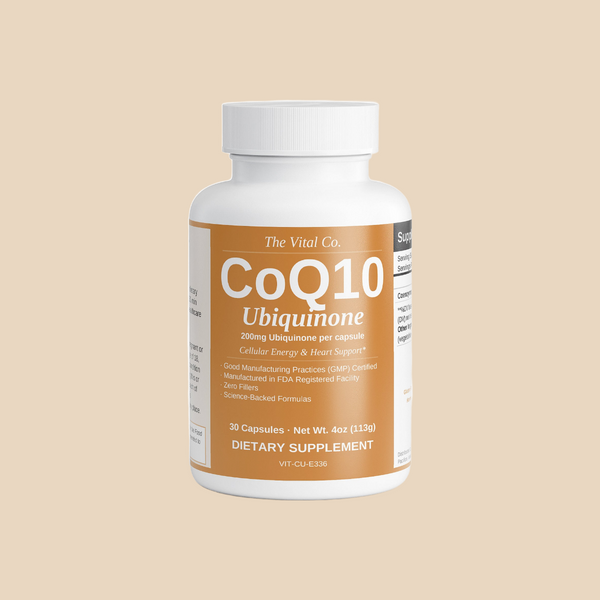
Coenzyme Q10 (CoQ10) supplements come in two forms: ubiquinone (the oxidized form) and ubiquinol (the reduced, active form). Supplement marketing often claims that ubiquinol is dramatically superior, but the clinical picture is more nuanced than most product labels suggest. This article examines what current research actually tells us about the differences between these two forms — including absorption, clinical outcomes, and which populations may genuinely benefit from choosing one over the other.
This article is for informational purposes only and does not constitute medical advice. Consult your physician before starting any supplement.
Table of Contents
- CoQ10 Basics: Ubiquinol and Ubiquinone in the Body
- Absorption and Bioavailability: What We Know
- Clinical Outcomes: Where the Research Stands
- The Redox Ratio: Why More Isn't Always Better
- Dosing: What the Studies Used
- Safety and Side Effects
- Frequently Asked Questions
- References
CoQ10 Basics: Ubiquinol and Ubiquinone in the Body
CoQ10 is a fat-soluble compound found in virtually every cell in the human body, with the highest concentrations in organs with large energy demands — the heart, liver, kidneys, and skeletal muscle. It plays two essential roles: serving as an electron carrier in the mitochondrial electron transport chain (where it is critical for ATP production) and functioning as a lipid-soluble antioxidant that protects cell membranes from oxidative damage.
The body continuously converts CoQ10 between its two forms. Ubiquinone (the oxidized form) accepts electrons during cellular respiration and becomes ubiquinol (the reduced form). Ubiquinol then donates those electrons — either to the next complex in the electron transport chain or to neutralize free radicals — and cycles back to ubiquinone. This redox cycling is constant and tightly regulated.
Endogenous CoQ10 production peaks around age 20 and gradually declines with age. By age 80, tissue CoQ10 levels may drop by 30–60% compared to peak values, according to autopsy studies. This age-related decline has driven interest in CoQ10 supplementation and raised the question of whether the form you take — ubiquinol or ubiquinone — makes a clinically meaningful difference.
The Marketing Claim vs. the Biology
The most common marketing argument for ubiquinol is straightforward: since ubiquinol is the "active" form and ubiquinone must be converted to ubiquinol before the body can use it as an antioxidant, taking ubiquinol should be more effective. This argument has some biological plausibility but oversimplifies the reality. The body possesses robust enzymatic systems (including NADH-cytochrome b5 reductase and thioredoxin reductase) that efficiently reduce ubiquinone to ubiquinol. In healthy individuals, over 90% of circulating CoQ10 is already in the ubiquinol form regardless of which form is ingested.
Absorption and Bioavailability: What We Know
Both forms of CoQ10 face the same fundamental absorption challenge: they are large, lipophilic molecules with inherently poor aqueous solubility. Absorption from the gut is slow, dose-dependent, and heavily influenced by the formulation technology (crystal form, carrier oils, solubilization techniques) rather than solely by whether the CoQ10 is in the ubiquinol or ubiquinone form.
Some pharmacokinetic studies suggest that ubiquinol achieves higher plasma CoQ10 levels at equivalent doses, particularly in older adults and individuals with conditions that may impair the ubiquinone-to-ubiquinol conversion. However, it is important to note that once absorbed, the body rapidly interconverts between the two forms based on metabolic need. Higher plasma levels also do not automatically translate to better clinical outcomes — a distinction that is critical when evaluating the evidence.
Formulation Matters More Than You Think
Modern formulation science has significantly improved the bioavailability of both forms. Techniques such as nano-emulsification, cyclodextrin complexation, and crystal-size reduction can dramatically increase absorption. A well-formulated ubiquinone product may achieve comparable or even superior plasma levels to a poorly formulated ubiquinol product. When comparing supplements, the delivery system deserves as much attention as the CoQ10 form itself.
Clinical Outcomes: Where the Research Stands
Mitochondrial Function and Exercise Performance
Acton et al. (2026) at Liverpool John Moores University conducted a six-week study in healthy males examining the effect of ubiquinol supplementation on mitochondrial respiratory function and exercise capacity. The study assessed mitochondrial function directly — measuring how well mitochondria utilized substrates for energy production — along with exercise performance outcomes. The results indicated that ubiquinol supplementation improved markers of mitochondrial respiratory function in healthy young men.[1]
In a separate study on athletic performance, Sánchez-Cuesta et al. (2022) examined CoQ10 supplementation in professional soccer players during competition. The study found that high CoQ10 plasma levels were associated with improved stress and damage markers, suggesting a protective effect during intense physical activity.[8] While this study used CoQ10 broadly rather than comparing forms directly, it supports the notion that elevated CoQ10 status — regardless of the supplemented form — may benefit individuals under high physical stress.
Cardiovascular and Altitude Research
Liu et al. (2024) published a substudy of the Shigatse CARdiorespiratory fitness (SCARF) randomized clinical trial examining the effect of ubiquinol on cardiac electrophysiology during high-altitude acclimatization and de-acclimatization. This study provided evidence that ubiquinol supplementation influenced electrophysiological parameters during the physiological stress of altitude adaptation, a setting where mitochondrial efficiency and oxidative stress management are critically important.[5]
For post-cardiac arrest resuscitation, Holmberg et al. (2021) at Beth Israel Deaconess Medical Center conducted a randomized, double-blind, placebo-controlled trial specifically using ubiquinol as a metabolic resuscitator. This study chose ubiquinol over ubiquinone based on the rationale that critically ill patients may have impaired capacity to reduce ubiquinone, making the pre-reduced form theoretically advantageous in acute metabolic crisis.[7]
Kidney Disease
Kirkman et al. (2023) at the University of Delaware conducted a randomized controlled pilot study examining a mitochondrial-targeted ubiquinol formulation on vascular function and exercise capacity in patients with chronic kidney disease (CKD). CKD is characterized by significant mitochondrial dysfunction, oxidative stress, and impaired exercise tolerance. This pilot study explored whether ubiquinol could address the mitochondrial deficits seen in this population.[6] CKD patients represent a population where the ubiquinol form may hold a theoretical advantage, as the metabolic derangements of kidney disease could impair the enzymatic conversion of ubiquinone to ubiquinol.
Male Fertility
Two recent studies have examined ubiquinol in the context of male reproductive health. GamalEl Din et al. (2025) conducted a randomized, double-blind, placebo-controlled study evaluating the in vivo supplementation of 2,660 mg D-aspartic acid combined with 200 mg ubiquinol and 10 mg zinc on semen parameters in men with idiopathic infertility. The combination approach makes it difficult to isolate the specific contribution of ubiquinol, but the study adds to the evidence that CoQ10 in the ubiquinol form may play a role in supporting sperm quality.[4]
Nedeljkovic et al. (2026) conducted an eight-week randomized controlled pilot trial examining creatine supplementation with and without ubiquinol on sperm quality biomarkers in both normospermic and oligospermic men. This study provides more specific insight into ubiquinol's potential role in male fertility, as the design allows comparison between creatine alone and creatine plus ubiquinol.[3]
What the Evidence Does NOT Show
It is essential to acknowledge a significant gap in the current research: there are very few head-to-head clinical trials directly comparing ubiquinol and ubiquinone at equivalent doses in the same patient population for the same clinical endpoint. Most studies choose one form and test it against placebo. This means that while we have evidence that ubiquinol has biological activity, we cannot definitively claim it produces superior clinical outcomes compared to ubiquinone in most contexts.
The Redox Ratio: Why More Isn't Always Better
An important and often overlooked finding comes from Stürmer et al. (2026) at Heinrich Heine University Düsseldorf, who analyzed the relationship between the CoQ10 redox state and mortality risk in a sample from the Northern German general population. Their analysis found that a higher redox state of CoQ10 — meaning a higher proportion of ubiquinol relative to total CoQ10 — was associated with higher risk of all-cause mortality.[2]
This finding challenges the simplistic narrative that "more ubiquinol is always better." The authors suggest that a shifted redox balance may reflect underlying metabolic stress or compensatory mechanisms rather than a protective state. While this observational finding cannot establish causation, it introduces an important caution: the body's CoQ10 redox ratio is tightly regulated for good reasons, and artificially pushing it in one direction may not always be beneficial.
This does not mean ubiquinol supplementation is harmful — it means the relationship between CoQ10 forms and health outcomes is more complex than supplement marketing typically acknowledges. The body's redox balance reflects an intricate equilibrium, and the clinical significance of altering that balance through supplementation remains an active area of research.
Dosing: What the Studies Used
Dosing across the clinical literature varies significantly depending on the condition being studied and the population:
- Male fertility (ubiquinol): 200 mg/day ubiquinol (in combination with D-aspartic acid and zinc) was used in the GamalEl Din et al. (2025) study.[4]
- Athletic performance and mitochondrial function: Doses in exercise studies have typically ranged from 100–300 mg/day, with the Acton et al. (2026) study using ubiquinol over a six-week period.[1]
- Heart failure (general CoQ10 literature): Larger clinical trials in heart failure have commonly used 100–300 mg/day of either form, with some studies going up to 600 mg/day.
- General supplementation: Most over-the-counter products provide 100–200 mg per serving of either form.
Practical Dosing Considerations
Both forms of CoQ10 are fat-soluble and should be taken with a meal containing dietary fat to optimize absorption. Splitting larger doses (e.g., taking 100 mg twice daily rather than 200 mg once) may improve absorption due to the saturable nature of CoQ10 uptake in the gut. Steady-state plasma levels typically take 2–3 weeks of consistent supplementation to achieve.
There is no established Recommended Dietary Allowance (RDA) for CoQ10. Most clinical studies have used doses between 100 mg and 300 mg daily. Higher doses (up to 1,200 mg/day) have been used in some neurological studies and appear to be well-tolerated, though such doses should only be taken under medical supervision.
Safety and Side Effects
Both ubiquinol and ubiquinone have an excellent safety profile across clinical studies. CoQ10 has been used in clinical trials at doses up to 1,200 mg/day with minimal adverse effects. The most commonly reported side effects are mild gastrointestinal complaints — nausea, diarrhea, and stomach upset — which typically resolve with dose reduction or taking the supplement with food.
Drug Interactions
The most clinically significant interaction is with warfarin (Coumadin). CoQ10's structural similarity to vitamin K means it may reduce the anticoagulant effect of warfarin, potentially increasing the risk of blood clots. Patients taking warfarin should not start CoQ10 supplementation without physician oversight and INR monitoring.
Statin medications are known to reduce endogenous CoQ10 production by inhibiting the mevalonate pathway (which is shared by both cholesterol and CoQ10 synthesis). Some clinicians recommend CoQ10 supplementation for patients on statins, though evidence that this prevents statin-related myopathy remains mixed.
CoQ10 may also interact with antihypertensive medications (potentially enhancing blood pressure-lowering effects), chemotherapy agents (theoretical concern about antioxidants reducing drug efficacy), and thyroid medications. Patients on any of these drugs should consult their prescribing physician before adding CoQ10.
Stability Considerations
One practical difference between the forms: ubiquinol is less chemically stable than ubiquinone because its reduced state makes it susceptible to oxidation when exposed to air, heat, or light. Quality ubiquinol supplements require more sophisticated encapsulation and packaging to maintain potency. If a ubiquinol softgel has turned from its characteristic milky white/light yellow color to a deep orange or brown, it may have oxidized to ubiquinone — essentially giving you the cheaper form at the premium price.

Frequently Asked Questions
Should I choose ubiquinol over ubiquinone?
For most healthy adults under 40, the body efficiently converts ubiquinone to ubiquinol, and there is insufficient head-to-head clinical evidence to conclude that one form produces meaningfully better outcomes than the other. Older adults, individuals with chronic conditions (such as heart failure or CKD), and those on statins may theoretically benefit from the ubiquinol form, as their conversion capacity could be impaired. However, robust direct-comparison trials are still lacking. Formulation quality and consistency of use likely matter more than the form for most people.
Can the body convert ubiquinone to ubiquinol?
Yes. The body has multiple enzymatic pathways for converting ubiquinone to ubiquinol, and in healthy individuals, over 90% of circulating CoQ10 is maintained in the ubiquinol form regardless of which form is supplemented. This conversion capacity may decline with age or in certain disease states, which is the primary rationale for supplementing ubiquinol directly in older or sicker populations.
Does a higher ubiquinol-to-ubiquinone ratio always indicate better health?
Not necessarily. Stürmer et al. (2026) found that a higher CoQ10 redox state (higher proportion of ubiquinol) was associated with greater all-cause mortality risk in a general population sample.[2] This finding suggests the relationship is more complex than "more ubiquinol equals better health." The redox ratio likely reflects the body's overall metabolic state, and an elevated ratio could indicate compensatory responses to underlying stress rather than a protective condition.
How long does it take for CoQ10 supplements to reach full effect?
Plasma CoQ10 levels generally reach steady state within 2–3 weeks of consistent daily supplementation. However, tissue saturation — particularly in the heart and skeletal muscle — may take longer. Clinical trials typically run for a minimum of 4–12 weeks before assessing outcomes. Acton et al. (2026) used a six-week supplementation period to observe changes in mitochondrial respiratory function.[1] For clinical conditions like heart failure, some studies have required 3–6 months or longer to detect significant benefits.
Is CoQ10 safe to take with statin medications?
CoQ10 is generally well-tolerated alongside statins, and some clinicians specifically recommend it because statins inhibit the same biosynthetic pathway that produces CoQ10. However, the evidence that CoQ10 supplementation prevents or treats statin-related muscle symptoms remains inconclusive, with some meta-analyses finding benefit and others finding none. If you are on a statin and considering CoQ10, discuss it with your prescribing physician — there is no strong evidence of harm, but the potential benefit for statin myopathy remains uncertain.
References
- Acton JP, Alsharif NS, Bond JW et al. "Effect of six weeks ubiquinol supplementation on mitochondrial respiratory function and exercise capacity in healthy males." European Journal of Applied Physiology, 2026. DOI: 10.1007/s00421-026-06275-w
- Stürmer P, Weber KS, Strathmann EA et al. "Higher Redox State of Coenzyme Q10 Is Associated with Higher Risk of All-Cause Mortality in a Sample from the Northern German General Population." Antioxidants (Basel, Switzerland), 2026. [DOI unavailable]
- Nedeljkovic D, Todorovic N, Javorac D et al. "The effects of 8-week creatine supplementation with and without ubiquinol on sperm quality biomarkers in normospermic and oligospermic men: A randomized controlled pilot trial." Nutrition and Health, 2026. [DOI unavailable]
- GamalEl Din SF, A M E, Elkhiat Y et al. "Evaluation of in vivo supplementation of 2660 mg D-aspartic acid and 200 mg ubiquinol and 10 mg zinc on different semen parameters in idiopathic male infertility: a randomized double blind placebo controlled study." Archivio Italiano di Urologia e Andrologia, 2025. DOI: 10.4081/aiua.2025.13554
- Liu Z, Yang J, Yang B et al. "Effect of ubiquinol on electrophysiology during high-altitude acclimatization and de-acclimatization: A substudy of the Shigatse CARdiorespiratory fitness (SCARF) randomized clinical trial." International Journal of Cardiology, 2024. DOI: 10.1016/j.ijcard.2024.131817
- Kirkman DL, Stock JM, Shenouda N et al. "Effects of a mitochondrial-targeted ubiquinol on vascular function and exercise capacity in chronic kidney disease: a randomized controlled pilot study." American Journal of Physiology. Renal Physiology, 2023. [DOI unavailable]
- Holmberg MJ, Andersen LW, Moskowitz A et al. "Ubiquinol (reduced coenzyme Q10) as a metabolic resuscitator in post-cardiac arrest: A randomized, double-blind, placebo-controlled trial." Resuscitation, 2021. DOI: 10.1016/j.resuscitation.2021.01.041
- Sánchez-Cuesta A, Cortés-Rodríguez AB, Navas-Enamorado I et al. "High coenzyme Q10 plasma levels improve stress and damage markers in professional soccer players during competition." International Journal for Vitamin and Nutrition Research, 2022. DOI: 10.1024/0300-9831/a000659